Backfill from an article published November 14, 2026, at 18:30 (UTC+8). The original was written by 0xJaehaerys and translated into Chinese by 白话区块链.
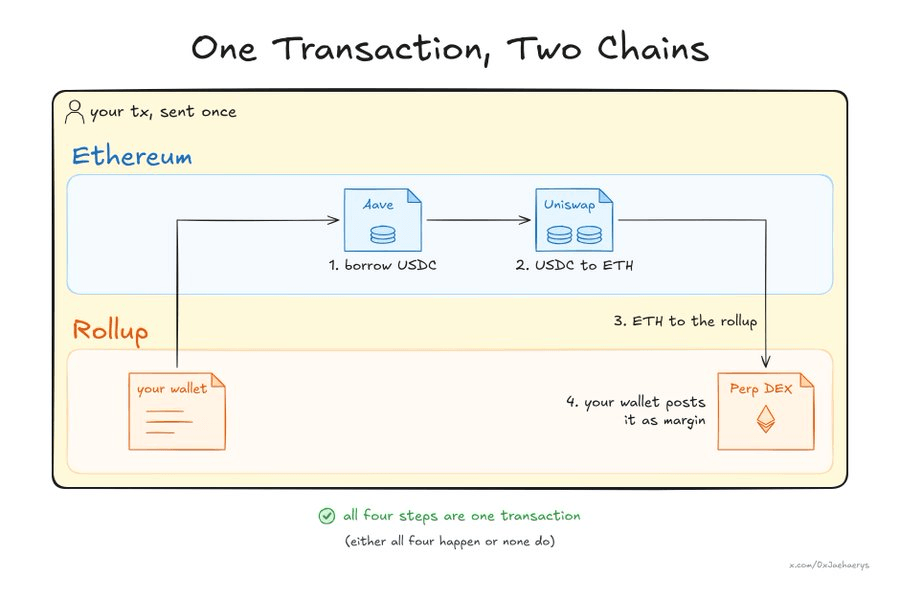
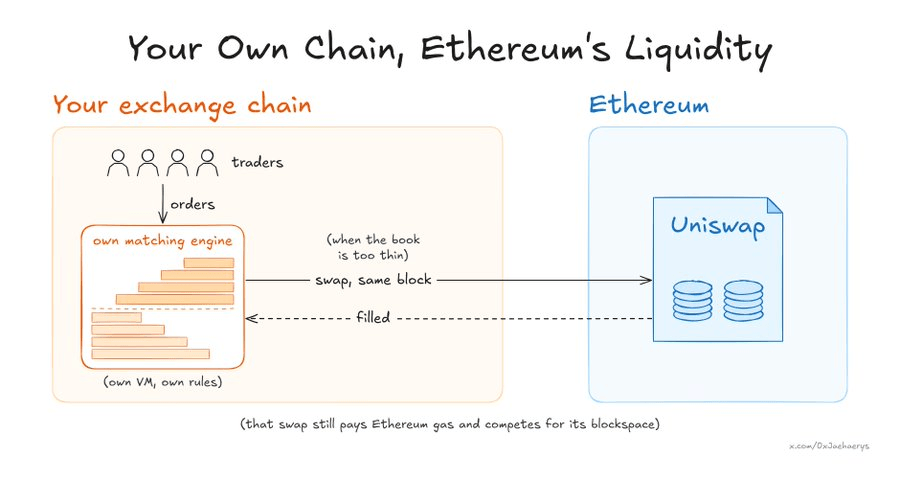
The Ethereum Economic Zone (EEZ) is a design for letting a connected rollup call contracts on Ethereum—or another connected rollup—within the same Ethereum block. Its aim is to make liquidity and applications usable across chains without turning those chains into one network with one set of rules. The original article describes both the proposed mechanism and demonstrations on a test rollup; those demonstrations do not establish that every rollup has adopted it.
What a chain must do
EEZ consists of Ethereum contracts and rules connecting chains to them, not a new chain or a required software stack. A participating chain can retain its own virtual machine, transaction ordering and access rules. To join, it must prove its new state within one Ethereum slot—12 seconds—and roll back with Ethereum if Ethereum reorganizes. That rollback requirement prevents one side of a cross-chain transaction from surviving after the other disappears.
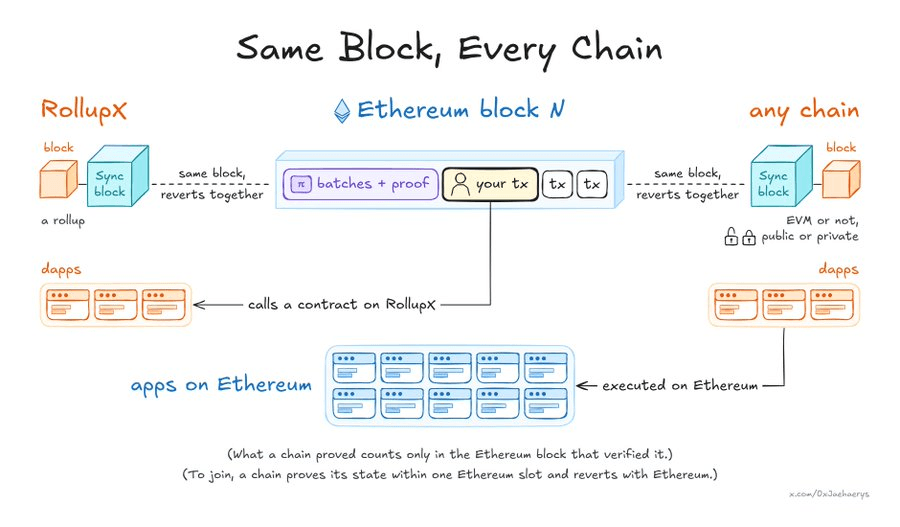
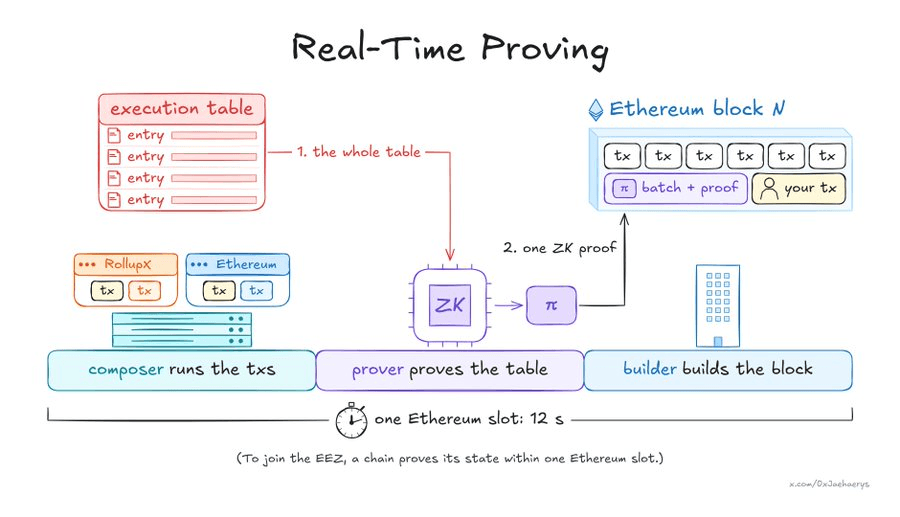
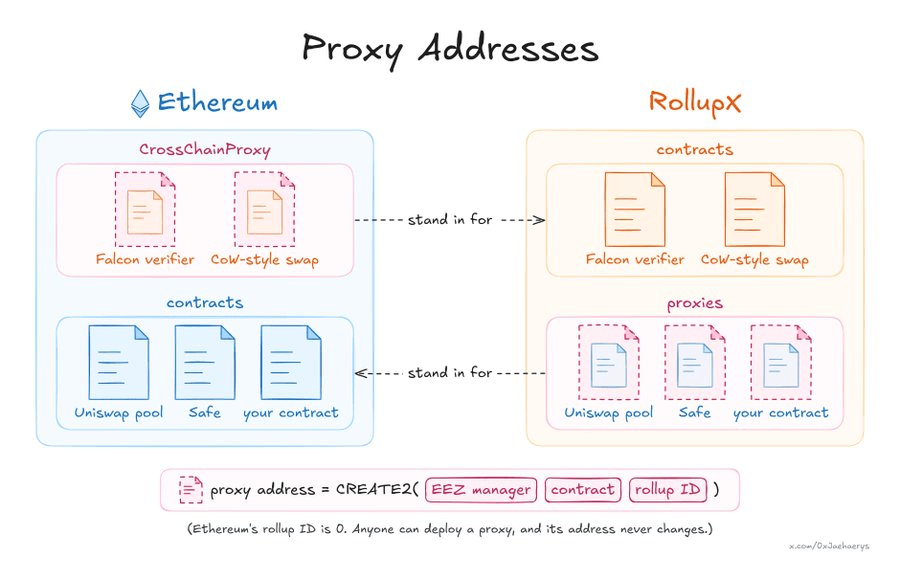
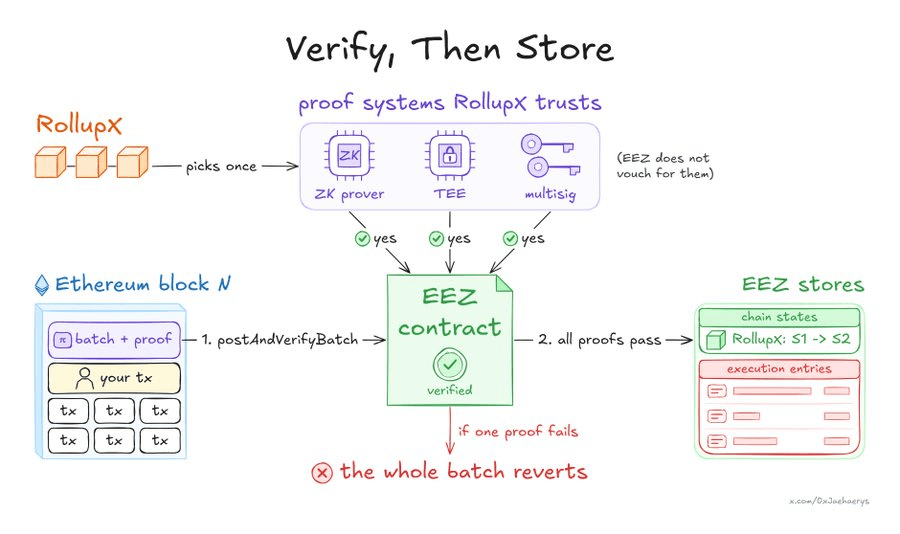
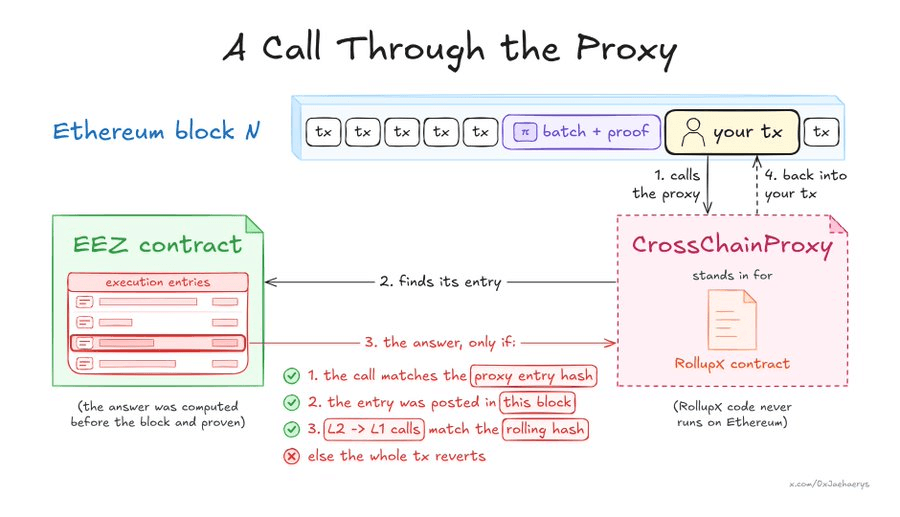
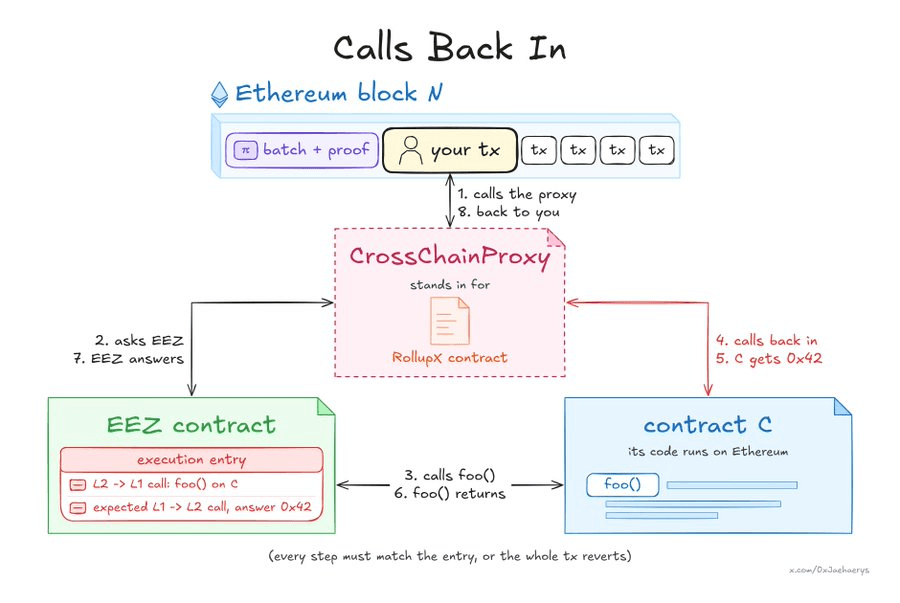
The design has three principal parts: real-time proving supplies evidence of the chain’s new state; a composer runs the proposed transaction across the involved chains before block production; and proxy contracts represent contracts on one chain to callers on another. EEZ verifies proofs and state-root changes rather than re-executing a rollup’s block. The rollup owner decides which proof systems to trust, including ZK proofs, trusted execution environments or multisignatures; EEZ does not endorse a particular choice.
How a same-block call is prepared
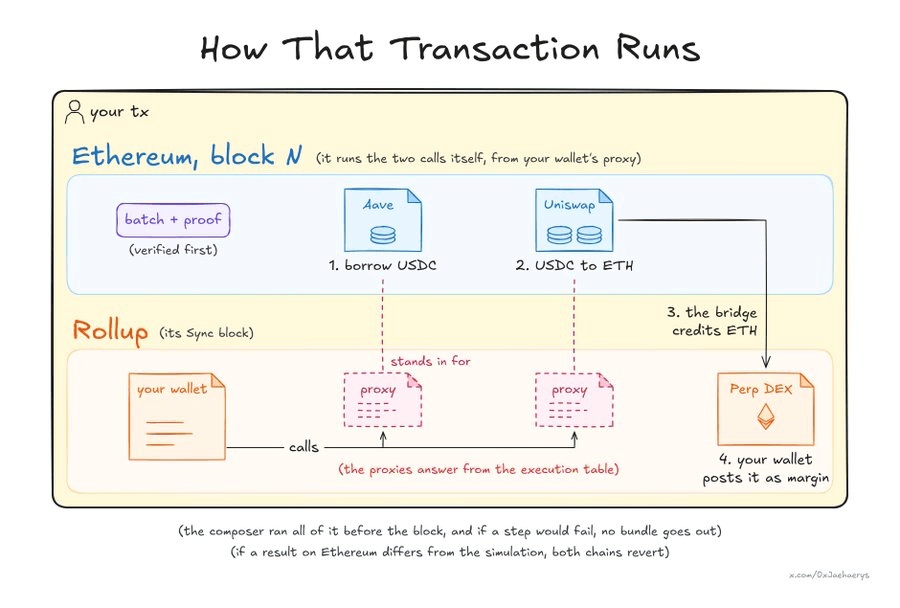
The composer records simulated cross-chain calls and their answers in an execution table, along with state-root changes and information used to check callbacks. It sends a bundle to a block builder: a postAndVerifyBatch transaction carrying the rollup batch, table and proof, followed by the user transaction. The builder must include the bundle in order or leave it out.
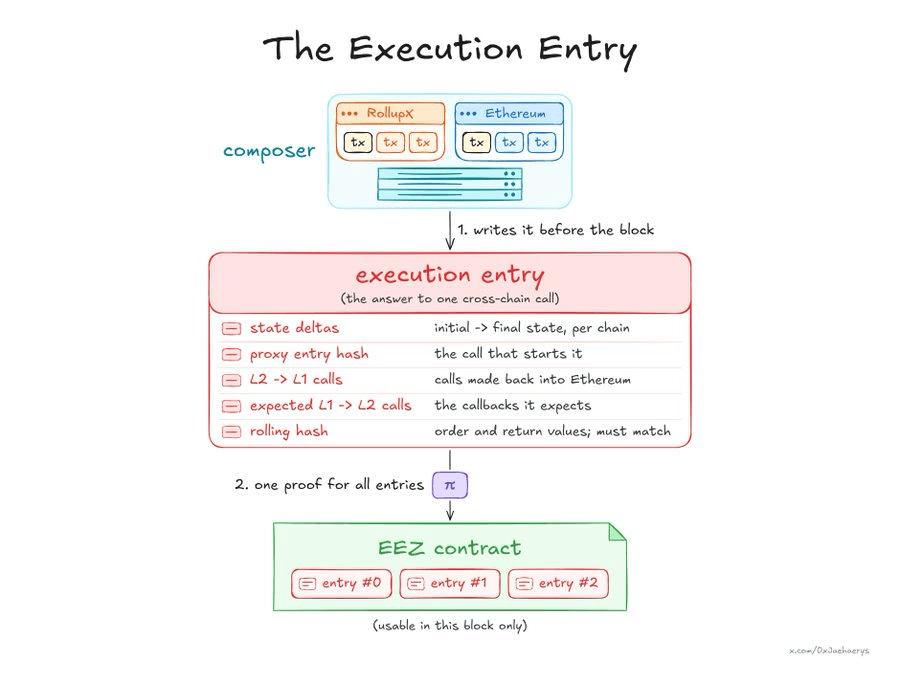
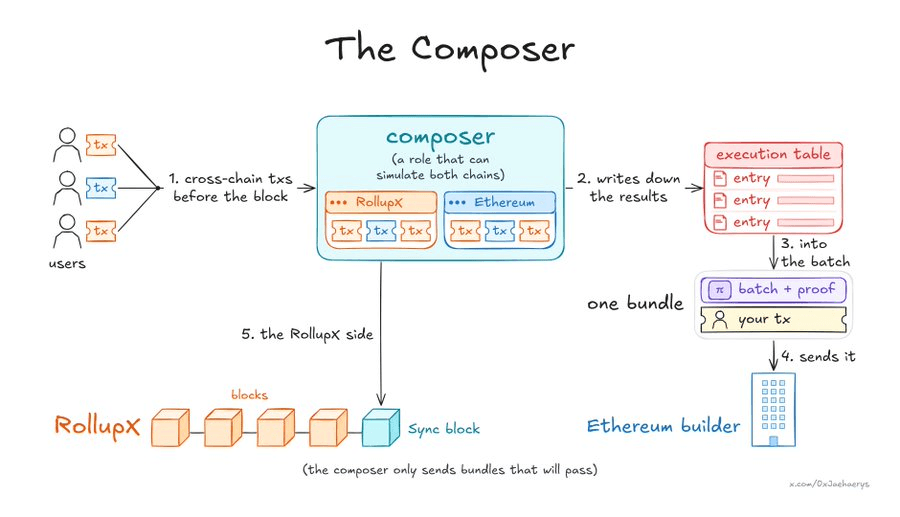
Once the batch proof passes verification, a proxy can return a prepared answer only if the actual call matches the simulation and the required batch arrived in the same block. Rollup cross-chain activity runs in a sync block tied to an Ethereum block. If the bundle misses that block, the sync block rolls back; if actual Ethereum execution differs from the simulation, the article says the operations on both sides revert.
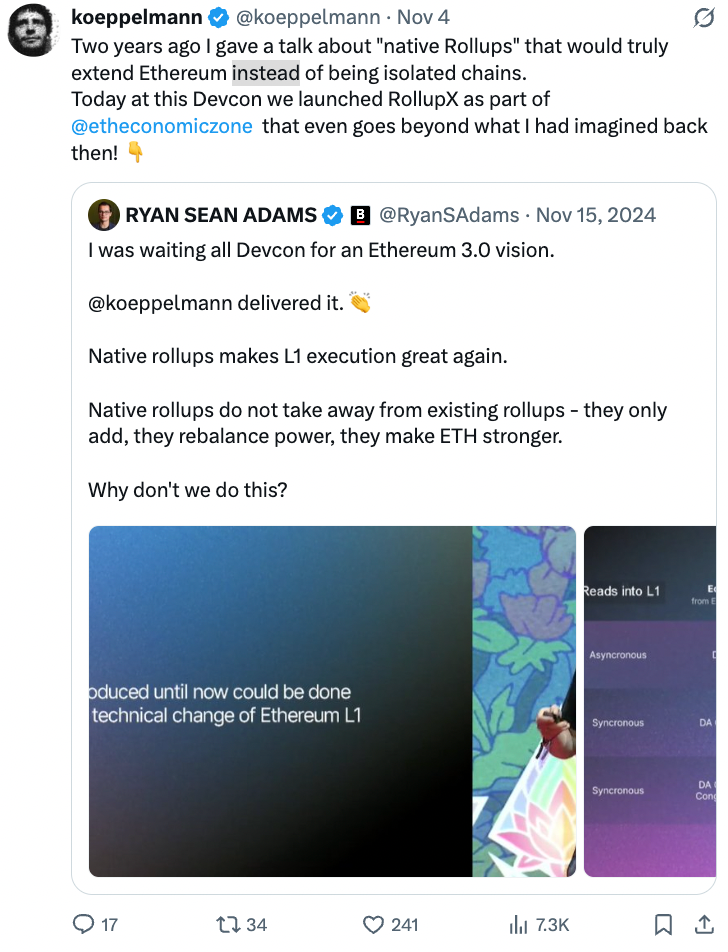
The article illustrates the intended result with a transaction that borrows USDC through Aave on Ethereum, swaps it for ETH through Uniswap and deposits that ETH as margin on a rollup trading platform. The collateral must already be held at the borrower’s Ethereum wallet proxy address. In this example, the user covers the Ethereum gas cost through a higher tip to the composer.
Demonstrations and constraints
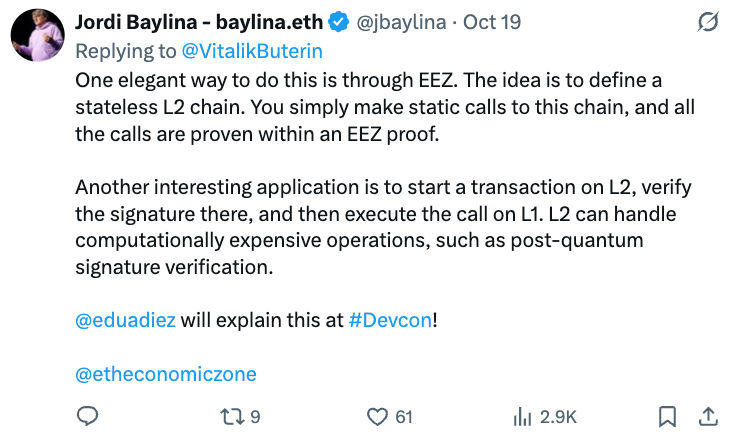
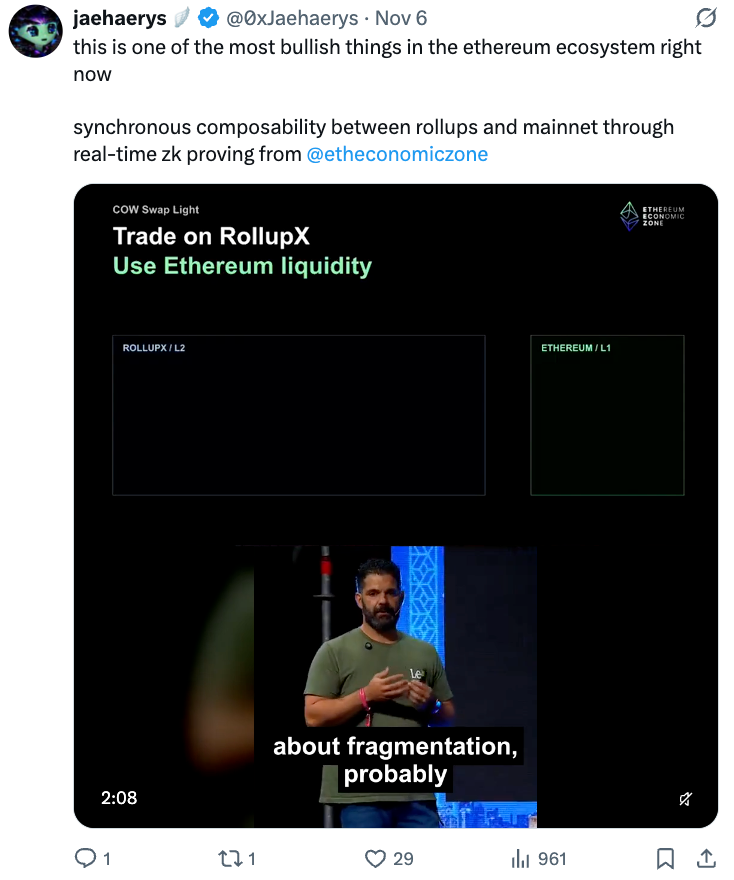
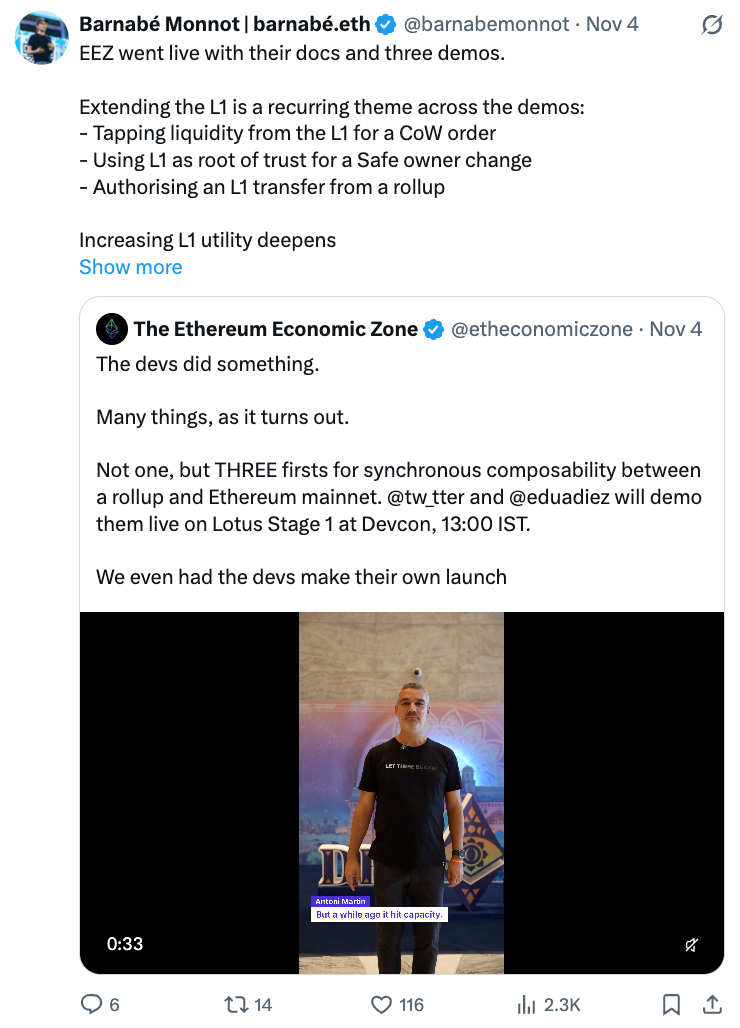
The article reports that a user on the mainnet-connected test rollup RollupX bought CRV from an Ethereum Uniswap pool, with a wrapped version minted on the rollup in the same swap transaction. It also describes a RollupX Safe that reads its owner list from an Ethereum Safe, a privacy-pool swap using Ethereum’s Uniswap V3, and a demonstration in which verifying a Falcon signature on a rollup authorized an Ethereum Safe payment. These are examples reported in the original, not evidence of broad deployment.
Same-block access has costs. The article says a chain cannot simultaneously have fast blocks, synchronous Ethereum calls and decentralized sequencing: it must choose two. A fast chain may therefore reach Ethereum only in its sync blocks, at Ethereum’s 12-second pace. The composer also needs to see an unencrypted transaction before block production, giving it and the builder an early opportunity to capture cross-chain MEV.
Finally, the mechanism depends on external builders. The article reported that validators built about 7% of Ethereum blocks themselves at the time; synchronous calls would not occur in those slots. It said every EEZ batch in its first month landed in a block built by an external MEV-Boost builder, with 56% landing in Titan-built blocks, compared with Titan’s usual 48% share. Those figures describe the period reported in the November 2026 article, not current network conditions.