A proposed route to quantum-resistant Bitcoin transactions would give wallet makers a difficult choice: use larger signatures, or use smaller ones that require careful tracking to avoid a security failure. That was the concern Trezor CTO Tomáš Sušánka raised in Decrypt’s report, published November 13, 2026.
The signature trade-off
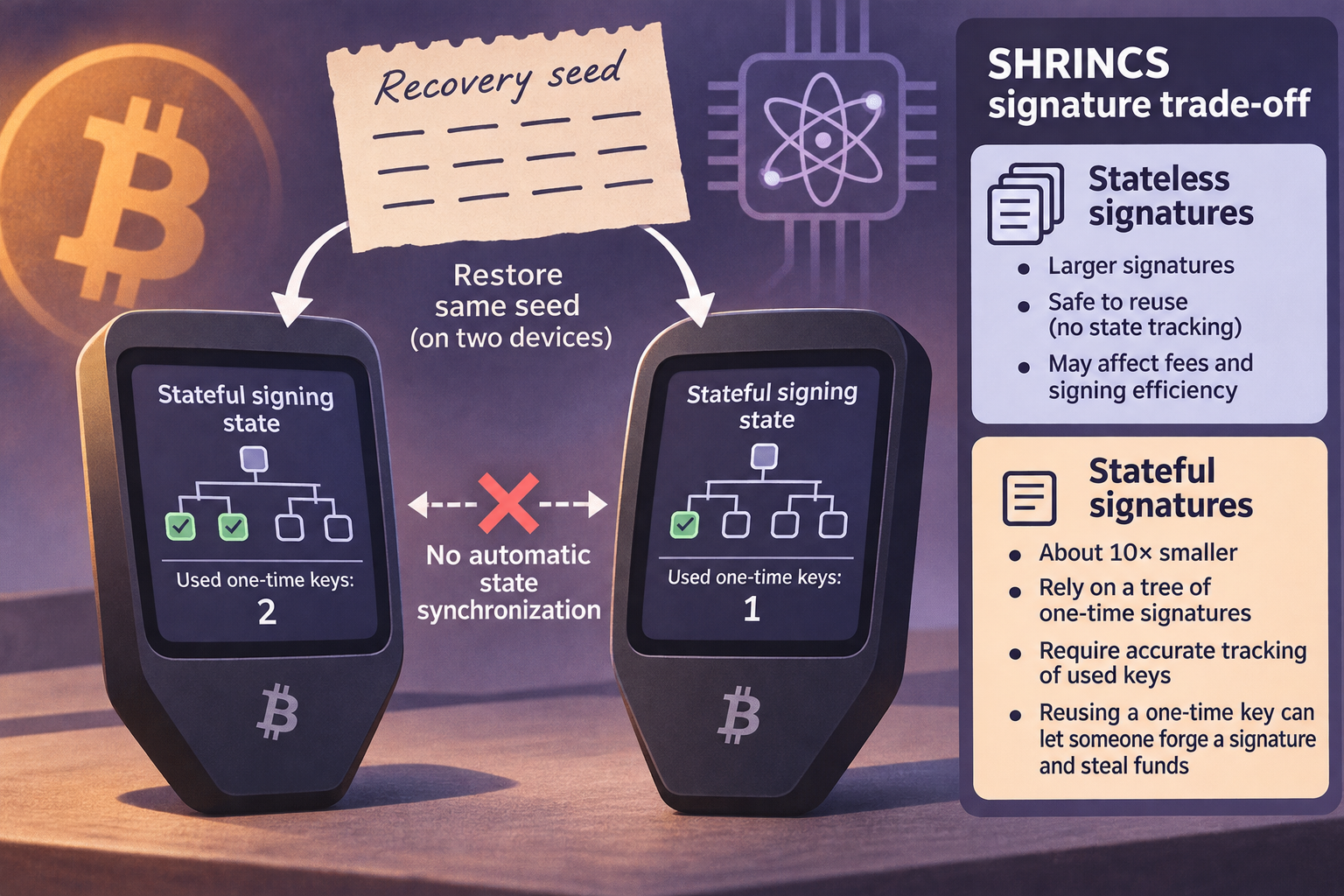
SHRINCS, proposed in late 2025 by Blockstream Research Director Jonas Nick and cryptographer Mikhail Kudinov, combines two kinds of hash-based signatures. Its stateless signatures can be used without tracking prior signatures, but are large and may affect fees and signing efficiency. Its stateful signatures are smaller—about 10 times smaller, according to Sušánka—but rely on a tree of one-time signatures.
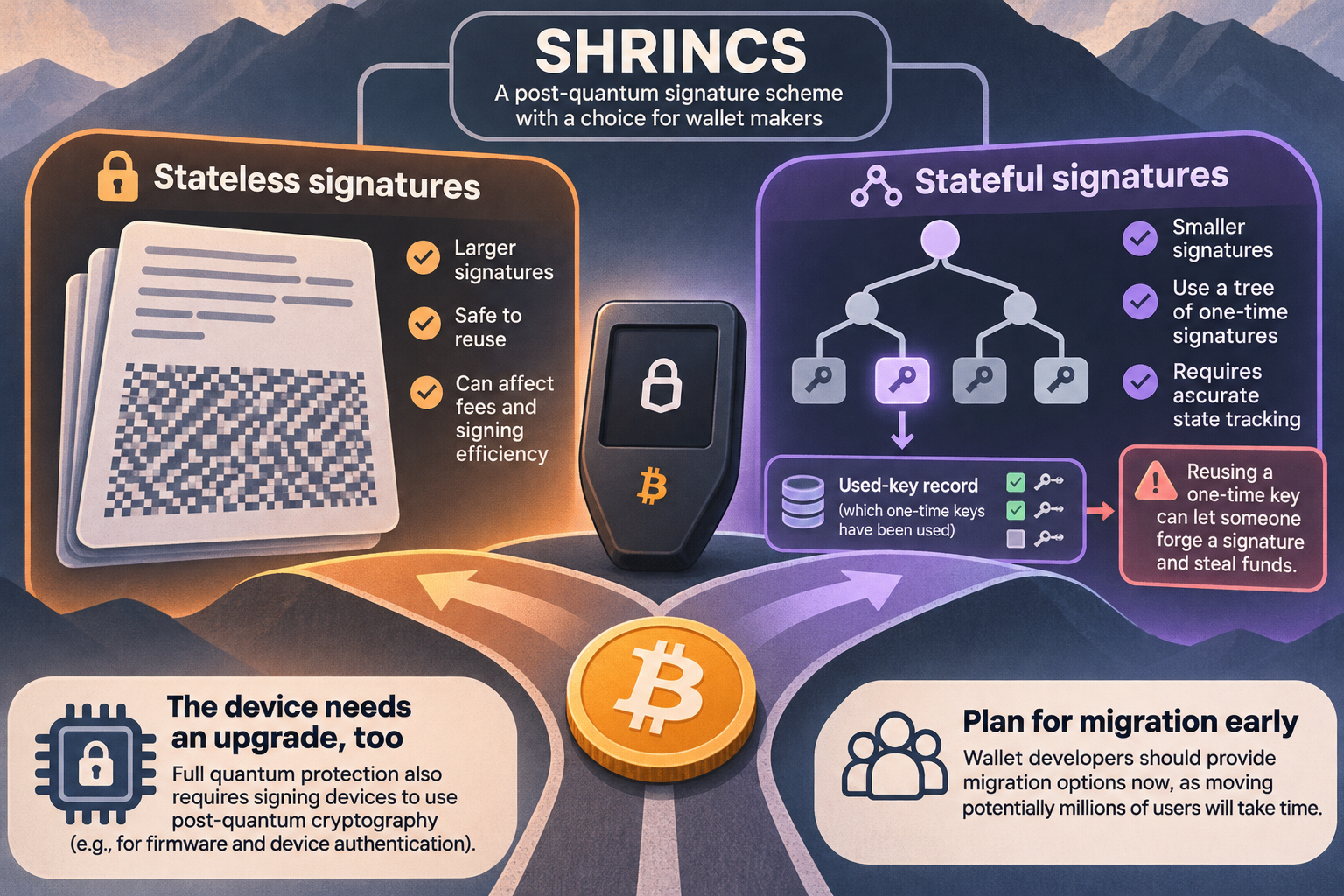
Reusing one of those one-time keys can reveal enough cryptographic information for someone else to forge a signature and steal funds. If Bitcoin adopts SHRINCS, wallets using its stateful option would therefore need to keep an accurate record of which keys have been used. Sušánka pointed to a practical complication: two Trezor devices restored from the same recovery seed would not automatically share that state.
Trezor is considering making stateless signatures the default and placing the stateful option behind advanced settings. That is a design option under consideration, not an announced Bitcoin upgrade.
The device needs an upgrade, too
Sušánka said quantum protection would also require changes to signing devices: hardware-specific functions such as firmware and device authentication commonly use cryptography vulnerable to quantum attacks. Trezor Safe 7 already supports post-quantum cryptography for wallet authentication, according to the report. That does not make its Bitcoin transactions quantum-secure; Bitcoin itself would first need to adopt post-quantum transaction security.
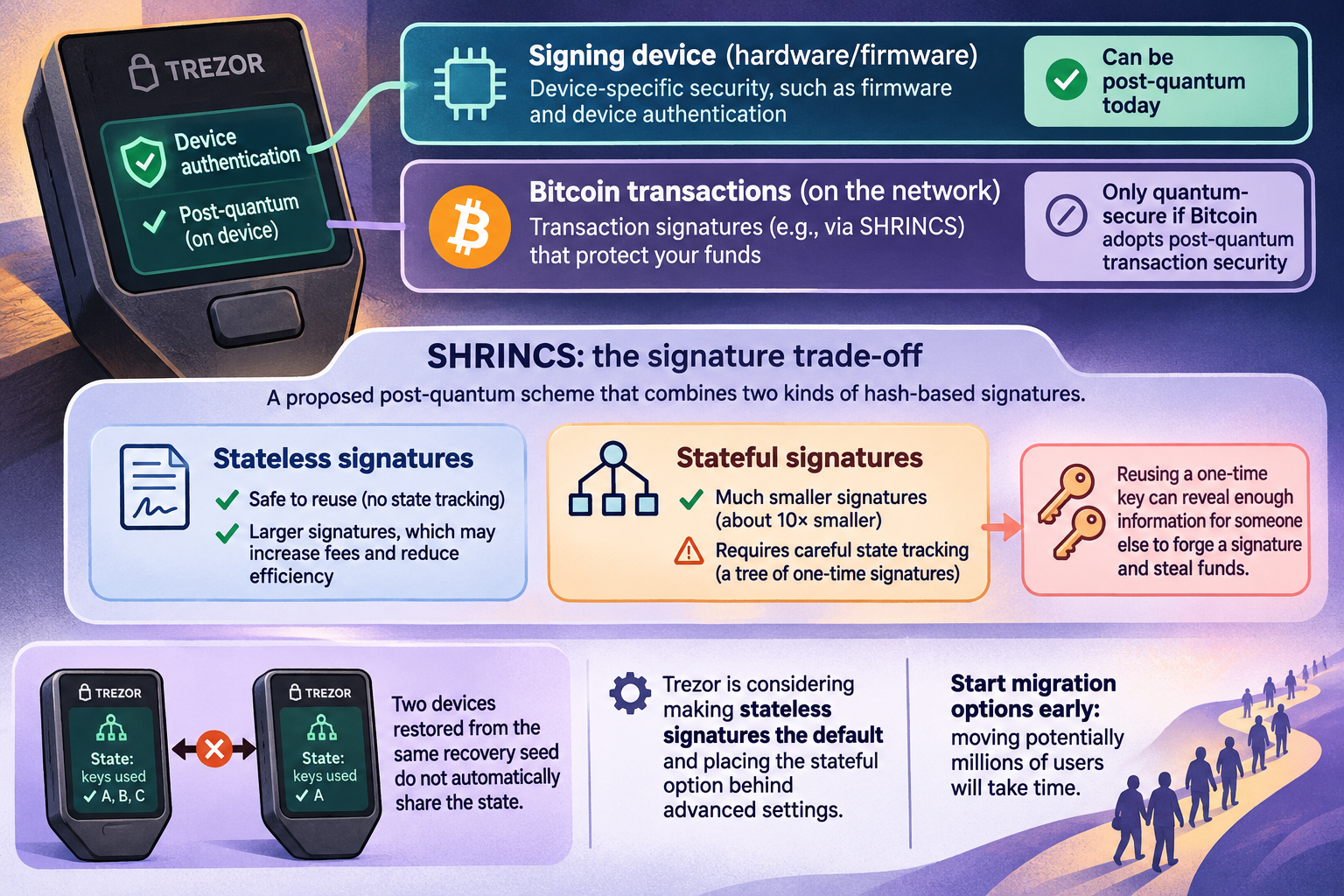
Sušánka urged developers to provide migration options early, arguing that moving potentially millions of users would take time.
Source: decrypt.co (originally published 2026-11-13 04:36 UTC+8)