
Ethlabs has proposed making 2027 a target year for Ethereum to become resistant to quantum and AI-related threats. The nonprofit research lab’s pqai27 roadmap was a community proposal, not an approved upgrade. As reported by TechFlow on November 12, 2026, changes to the Hegotá fork and Ethereum’s consensus layer would still require discussion and agreement among core developers.
The proposal separates an initial “pqai-ready” stage from a more ambitious “pqai-scaled” stage. The first calls for quantum-resistant consensus and a way for users to move to quantum-resistant accounts through the Frames account-abstraction proposal, EIP-8141. If existing cryptography failed sooner than expected, the roadmap envisages falling back to calldata to keep the network operating.

The second stage aims to restore normal throughput at full network load after those protections are introduced. It proposes quantum-resistant signature aggregation through EIP-8288 and quantum-resistant data availability through EIP-8479 for transactions and blobs. These are proposed components, not capabilities already deployed.
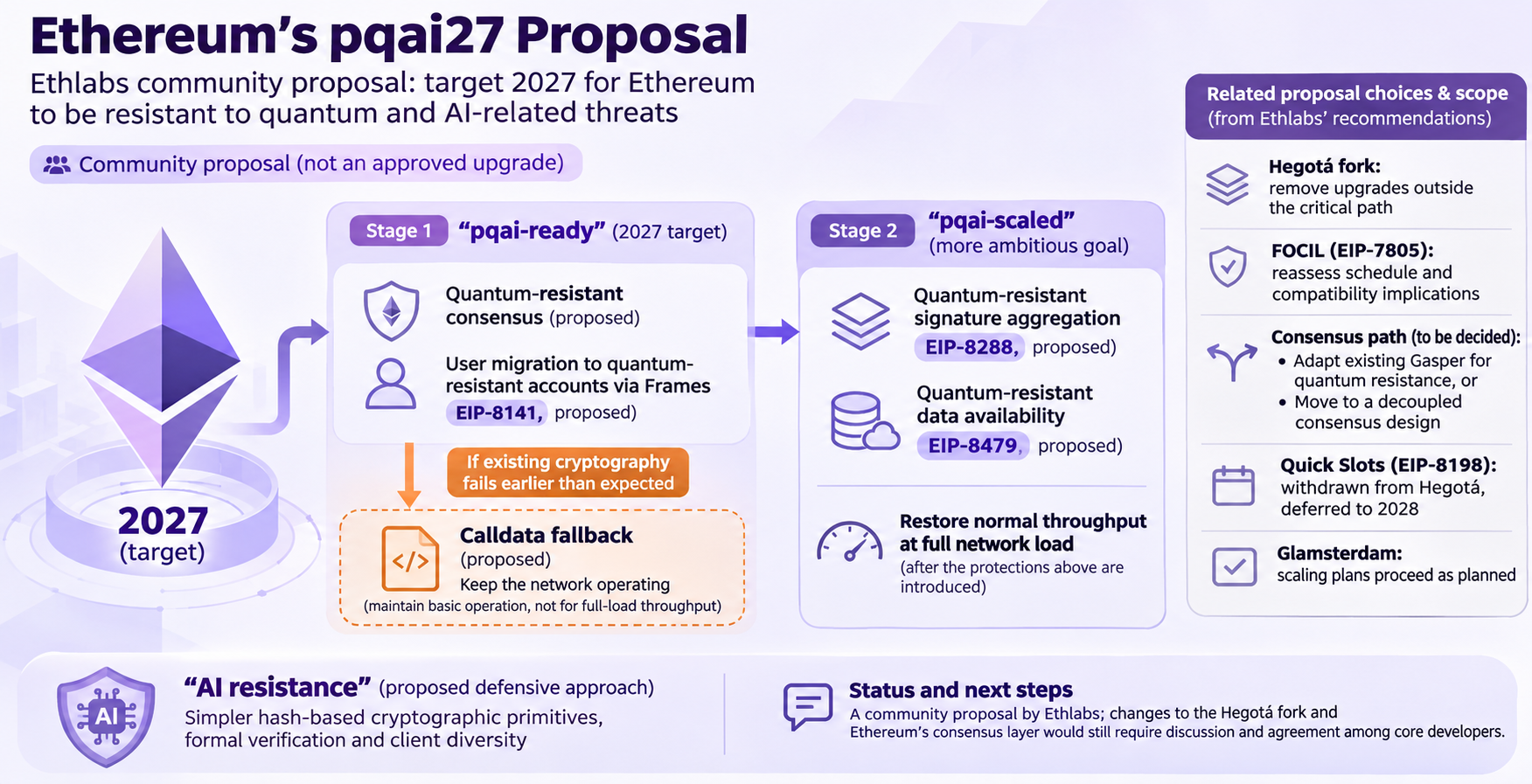
To make room for that work, Ethlabs recommends removing upgrades outside the critical path from Hegotá’s scope and reassessing the schedule and compatibility implications of the censorship-resistance proposal FOCIL (EIP-7805). It also raises a choice between adapting the existing Gasper consensus system for quantum resistance and moving to a decoupled consensus design. Ethlabs said it was withdrawing its Quick Slots proposal, EIP-8198, from Hegotá and deferring it until 2028; the source says Glamsterdam and its scaling plans would proceed as planned.
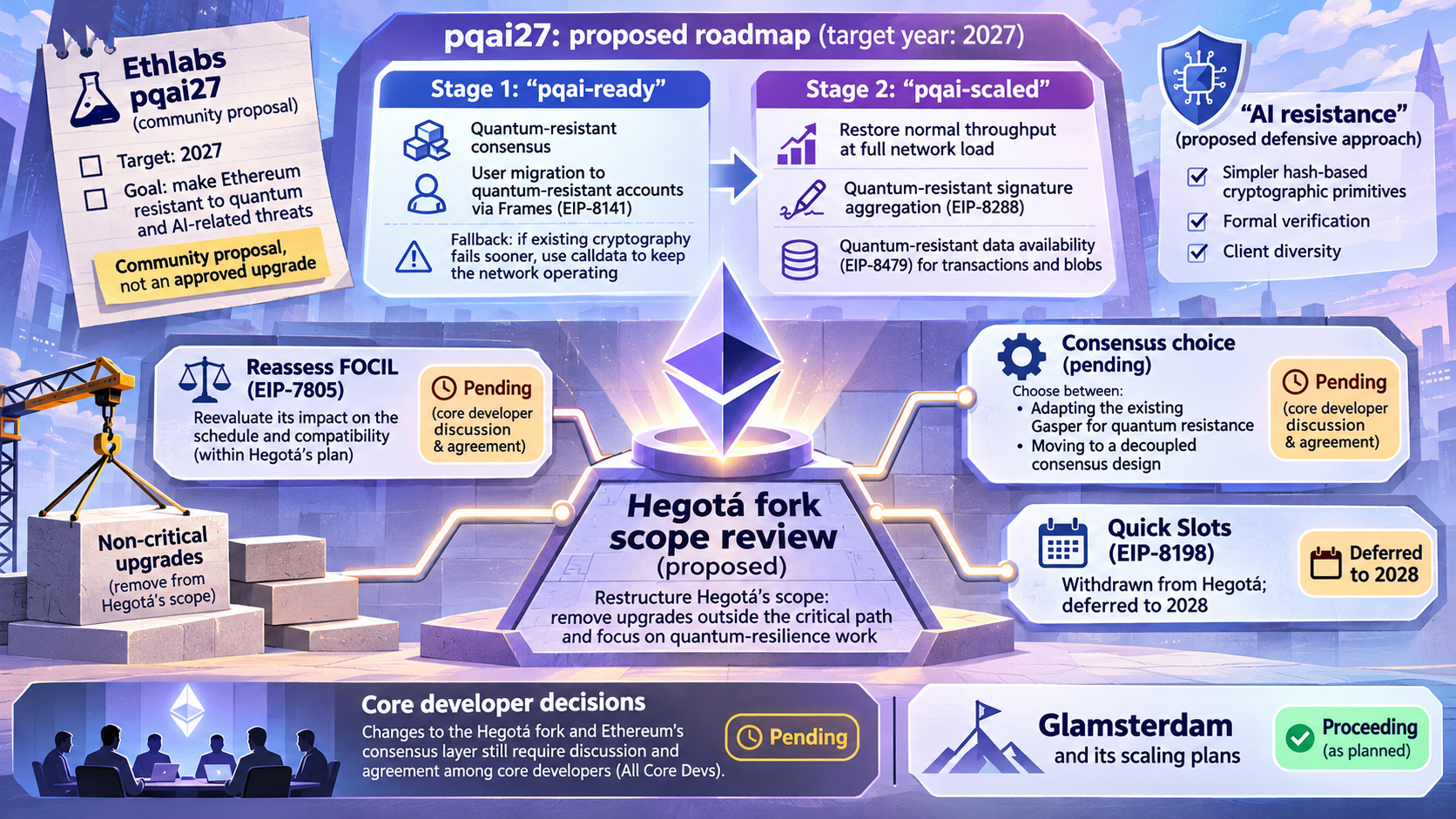
Ethlabs frames “AI resistance” around simpler hash-based cryptographic primitives, formal verification and client diversity. That framing describes a proposed defensive approach, not a claim that Ethereum has achieved it.
Source: techflowpost.com (originally published 2026-11-12 11:42 UTC+8)