
As reported on November 16, 2026, Ethereum developers were advancing EIP-8037 for the planned Glamsterdam upgrade. The proposal would raise the gas cost of creating new on-chain storage, prompting concern about projects that distribute tokens by writing balances to large numbers of addresses. The higher costs were proposed, not an enacted rule.
Under the proposal, the cost of opening a new storage slot would rise from roughly 22,100 gas to 110,020 gas. Creating a new account would cost 197,900 gas. The aim is to price the lasting burden of new state: Ethereum nodes must maintain storage records after the transaction that created them.
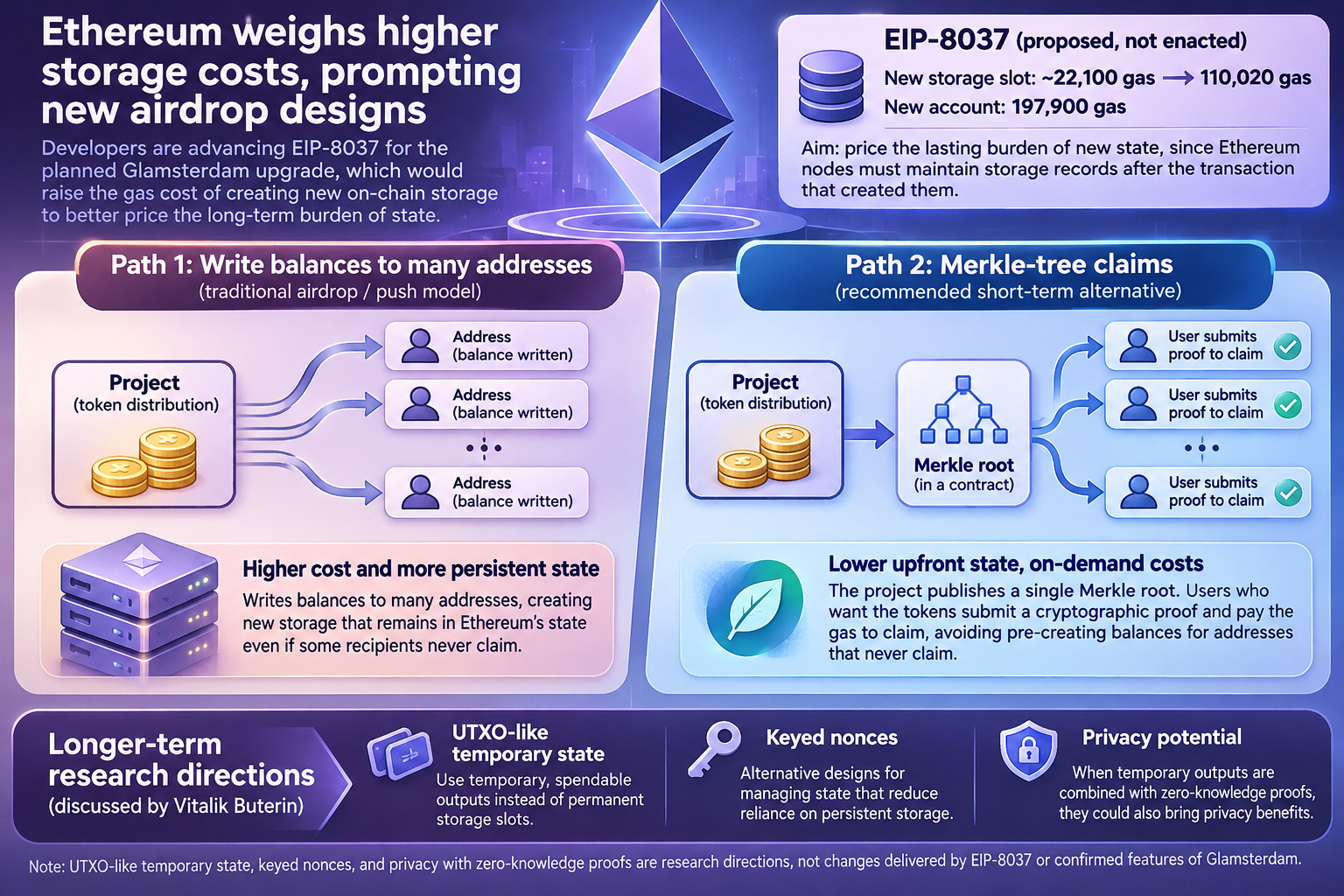
Ethereum co-founder Vitalik Buterin pointed to a shorter-term alternative for mass distributions: Merkle-tree claims. Instead of pushing balances to every recipient address, a project can put a Merkle root in a contract. Users who want the tokens then submit a cryptographic proof and pay the gas to claim them. That avoids creating balances in advance for addresses that never claim.
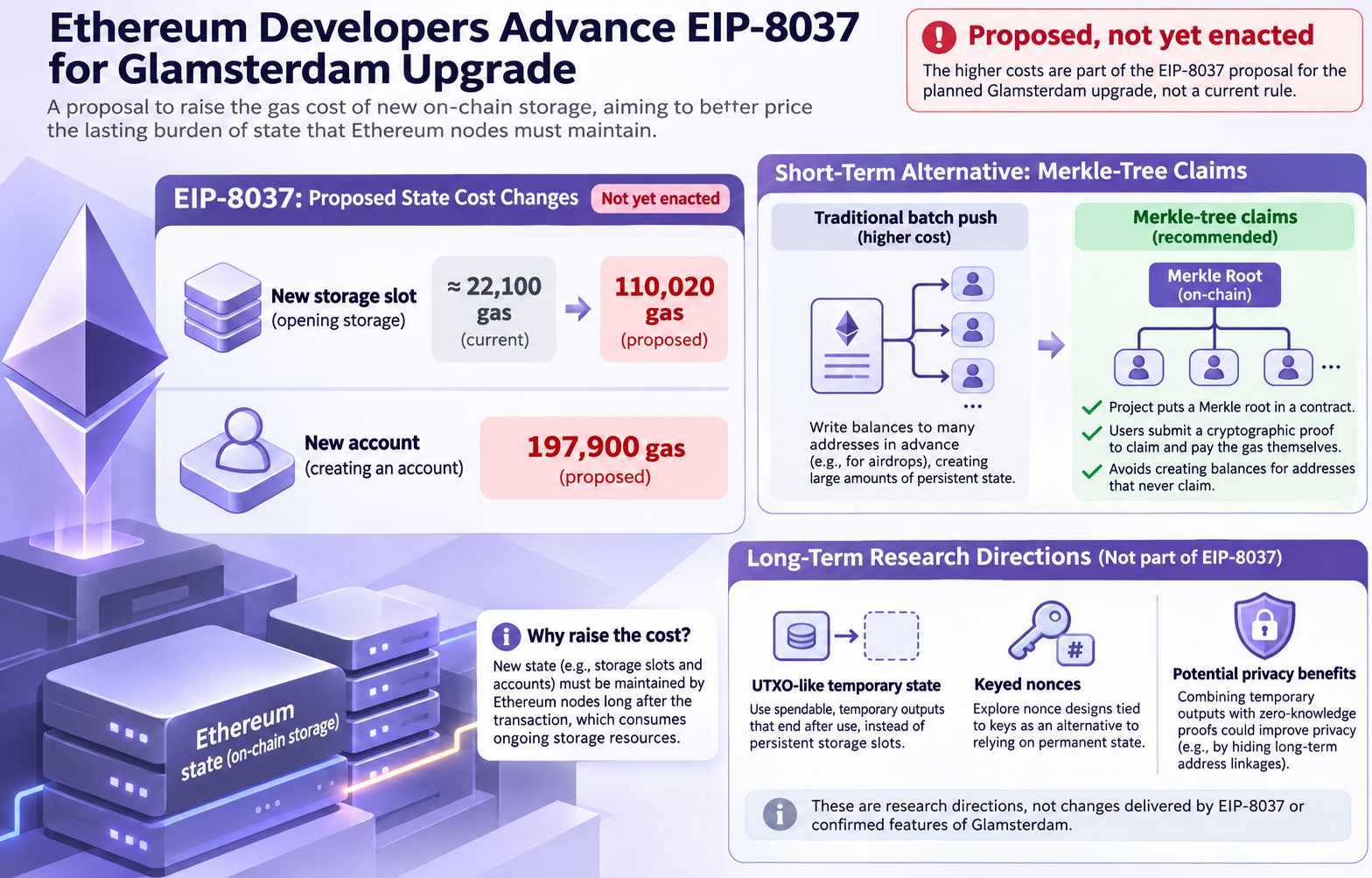
For the longer term, Buterin discussed research into UTXO-like temporary state and keyed nonces as alternatives to relying on persistent storage slots. The November 2026 account also described potential privacy benefits when temporary outputs are combined with zero-knowledge proofs. These are research directions, not changes delivered by EIP-8037 or confirmed features of Glamsterdam.